In this class we have paid a lot of attention to other cultures, religions, and ways of living. However, we have not given a lot of time – until the last couple of weeks – to the difficulties of immigrants living in America. I am studying this in my history class right now, as we learn about the immigration boom in America during the 19th century. Back then, people from China, Mexico, and other countries moved to America to pursue a better life for their families. Not for themselves. They were put to work on railroads, in factories, and at other jobs that involved unskilled labor.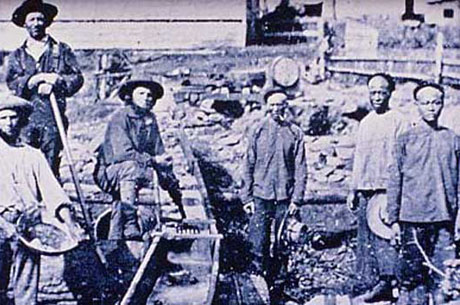

However, though I know the stories of the distant past through my history class, I had not stopped to consider that this struggle of the immigrant was still occurring during the 20th century setting of The Woman Warrior – or that it might still be happening today. When reading about Kingston’s mother, Brave Orchid. Kingston talks about how her mother and father both knew of the communist troubles their former home was undergoing and that it would not be safe or practical for them to return. Yet, Brave Orchid longs for her old friends, her old status as a doctor, and her old life. Said she, “This is terrible ghost country, where a human being works her life away. In China I never had to even hang up my old clothes. I shouldn’t have left,” (Woman Warrior, 104). Her daughter attempts to reason with her, saying “If you hadn’t left, there wouldn’t be a me for you to support, Mama,” (Woman Warrior, 104). Still, Brave orchid complains about the pace of life in America, saying “Human beings don’t work like this in China. Life goes slower there,” (Woman Warrior, 104) and insists on labeling every white person she sees as a “ghost” of some form. Yet, though she complains of the faced-pace days in America, she has done a better job adjusting than perhaps she even knows, as she is able to work and do a lot of household jobs while her sister, Moon Orchid, newly immigrated from China, can do very little. Kingston even describes how Brave Orchid grows impatient with Moon Orchid’s inability to do even little tasks in a timely manner and, Kingston notes that eventually Brave Orchid gets so frustrated she says, “’Go take a walk!” and Kingston describes her as “exasperated,” (Woman Warrior, 137). Her daughter, on the other hand, considers America to be where she belongs, which one would think would be what Brave Orchid desired for her family. Instead, she continue to bemoan her situation and wish for her life back home. This is understandable, to me, but still heartbreaking. I cannot imagine giving up my entire life to come to another country where I would be completely unhappy. I cannot imagine my own country becoming so dangerous that I had to leave. I cannot imagine giving up everything I love for my children – and then not valuing my little girl because she was a girl. But that’s just that: I cannot imagine it. So I cannot judge Brave Orchid on her decisions or attitude or the way she makes her daughter feel, I can only take notice of the way she handles things and try to learn more about what made Brave Orchid the way she was and how that shaped Kingston’s life and memories.

No comments:
Post a Comment