Monday, May 17, 2010

Dass 3

It was December 24, 1999. I was an excited nine year old, dancing and skipping around my mom’s waist as she hung up our Christmas wreath on the door and set up all the annual Christmas Eve decorations across the house. Bing Crosby’s mellifluous and calming voice was radiating through the walls and flowing over my excited, tiny frame. Christmas Eve! Stockings, candy canes, cookies, a warm fire…nothing could be better! I sat down on the couch to put together a nativity scene my mother had handed to me and waved to my dad as he walked out of his bedroom, wearing khaki shorts and a t-shirt. (Me with my dad, at age 9. image is author's own.) “Where are you going, Papa?” I asked him. He didn’t usually dress so casually, especially going into the office like he was on that particular day.

My dad smiled and sat down on the couch next to me. “Well, sweetie, I’m planning on leaving the office a little early this afternoon to go do something nice for some people. And you and your mother and brother are coming with me.”

“We are? Where are we going?” I questioned him, not too sure I liked the idea of leaving the miniature heaven of my living room for even a couple of hours.

“Tonight, we’re going to go serve food to some folks who can’t afford to have a Christmas Eve dinner. It’s at a homeless shelter in downtown Dallas,” my dad replied.

“What’s a homeless shelter?” I asked, enunciating each of the words carefully, trying to figure out exactly what my dad was trying to explain to me.

“Well, sweetie? Remember when Uncle Roger lost his job last summer? He was lucky enough to find another job quickly, but some people lose their jobs and don’t find new ones right away. Some people lose their homes and have nowhere to go. A homeless shelter is a place for people like that to stay – to sleep and eat – until they find jobs again like Uncle Roger did,” he said, while stroking my hair lightly, trying to lull me into understanding.

I did understand. But I was not happy. “So, we are going to spend our Christmas Eve night with homeless people?” came my crassly incredulous response.

I knew I was being surly, and I waited for my dad’s angry reaction. Instead, however, his mouth twitched into a small smile and he chuckled a bit.

“Yes we are, and I guarantee that by the end of the night you’ll be so much happier about it than you are right now. It’s important, Spin, to help those who aren’t as fortunate as we are. Imagine if you were in their place, wouldn’t you want someone else to help you? It will only take a couple of hours, and we’re going. No buts about it,” my father concluded with his favorite phrase. I rolled my eyes.

Five hours later, I understood exactly what my father was talking about.(At first, I was scared of the haggard looking people I saw sleeping on cots in the shelter, like this one. image courtesy of:http://blog.lib.umn.edu/marqu154/architecture/01-19-07-HomelessShelter2.jpg). The night had been a whirlwind for me, to say the least. I went from being unhappy about going to the shelter, to scared of the people there, to nervous that I would spill the food I was ladling out onto their plates, to curious about not just their living conditions but their lives and hobbies and emotions, to excited to play with the kids my age, to amazed at the strength, kindness, and dignity each of the individuals I connected with showed. The experience was honestly the most rewarding I had ever had in my short, single-digit aged life. Just seeing the utter gratitude and thankfulness in the eyes of the strangers I was handing bread and salad to was enough to cause me to forget all of my own so-called woes. I read the Bible with my family and my class at school, I had developed what I thought was a good conscience, I didn’t lie or cheat or steal anything and I tried to be kind to those around me. But never in my life had I given myself over to a moment of service. Knowing that I was part of the reason that the elderly lady with the pink shawl and missing teeth was grinning a huge, toothless grin – well that feeling was beyond irreplaceable. Ram Dass speaks of service to others with a reverence akin to what I felt that night, saying that “[with service] we see our deepest yearnings reflected in others, and this encourages us to believe in our own purity and beauty,” (Dass, 217). Not only did I feel the compassion Dass speaks about when he says that, “through these practices, and our efforts to keep our hearts open in the presence of suffering, we find ourselves more available to whoever we are with….compassion is increasingly an automatic response,” but I felt actually connected on some kind of otherworldly level with the people I was interacting with (Dass, 225).

I went home that night and cuddled up between my mother and father by the fire (my little brother was in bed and I had my parents to myself, much to my delight). My parents took turns reading the “Christmas” story from the book of Luke in the Bible, but I only half-listened. I couldn’t focus on anything other than the faces in my mind of the people I had bonded with at the shelter. For the first time in my short little life, I felt like I had some kind of massive purpose that I was just starting to unwrap. Dass said, “service not only reveals a larger vision of life, but steadily moves us along and supports us in our efforts to realize this vision,” (Dass, 224). Indeed, I didn’t know exactly in what capacity or when, but I knew that the night’s act of service would certainly not be my last. Selfishly, I wanted to experience the warmth in my belly that I was feeling tonight every single night of my life. The act of service had caught hold of me, just as Dass promises it will for all of us. I tugged on my dad’s sleeve, stopping him from his reading aloud.

“Papa, can we do that again on Christmas too?”

My dad smiled down on me, his whole face lighting up. “You caught the bug too, huh little girl?”

I sure had.

Sunday, May 16, 2010

Thursday, May 6, 2010

Who Am I Now?

“Let me reintroduce myself

as a man with a cause

I’ve had a lot of time to think

and look at who we are”

- Cartel, “Let’s Go”

In order to do an analysis of the person I am now versus the person I was before this class began, I decided to look back at the “Who Are You?” discussion board prompt from this past summer. I got so caught up reading everyone’s entries before I even got to mine and, boy, was that a fun experience. It’s so funny to read everyone’s descriptions of themselves while being able to not only put faces to names but personalities to names as well. It felt almost like looking back on a school yearbook or something – it made me both happy and yet depressed because we’re almost done with this year, and there will be no more figuring out who we are or writing long, thought-out DB’s about ourselves. There will be no more exploring this journey of a class together. We are finished! It really was so cute to read everyone’s posts – each of us so excited to begin our college experiences and naïve of what this class and all of classes here at Plan II would open our eyes to. I feel like we have all grown up SO very much this year, it’s really incredible.

My post about myself from last summer was totally typical of me – way too verbose and not at all concise (nothing’s really changed in that department, even though Bump has tried….)! On the surface, a lot of things are the same. I’m still a swimmer, I’m still dealing with a back injury, I’m still a TV fanatic, I still have a weird name! However, if you look deeper, I see a lot of really cool changes between who I was then and who I am now. I think the most notable change in how I describe myself in that post and how I would describe who I am now is the sort of lack of substance in my summer’s post. Not to say that I had no substance to me back then, but it just seems to me like there are so many important things missing from that post. I don’t mention religion – that I am a Christian who is still searching for exactly what I believe and scared sometimes about finding the answers. I don’t mention any of the things I struggle with that I have learned about myself this year – like dealing with stress, problems with patience, and being open to different views. The last one is the most important, I think, and I have improved that a lot this year. I didn’t include any of that in my last summer’s DB but I definitely see fit to include them now.

Another noticeable difference in how my view of who I am has changed is in regards to animals. Last summer I wrote, “Over the years I think we've had about 19 pets ranging from rabbits to geckos to cockatiels to guinea pigs - we've pretty much done it all. I love my pets and am excited about the connection this class has to animals.” Now, when asked to write about my feelings for animals, it would be a completely different paragraph. I’d talk about Earthlings, how much it affected me and how heartbroken and physically sick I felt for days after watching it. I would talk about how important it is that videos like that get seen by more and more people, so that this incredible cruelty to animals that goes on right under our noses can stop. I would talk about how I plan on adopting a little kitten from a shelter next summer – and that all future animals I acquire as pets will no longer be from pet stores or breeders but instead from the pound or SPCA or another shelter-type organization. I know that my love for and undestanding of animals is ongoing, and if you check back with me at this time next year I might have a whole NEW set of things to talk about regarding animals. I’m just grateful this class opened my eyes to something I hadn’t – and didn’t really want to – see before.(My love of animals goes far beyond that of just my pets, now).

I feel secure in myself now. I didn’t feel that way last summer. I talked last summer vaguely about working in television when I grew up, but I didn’t really have any crazy goals or dreams that most almost-college-students have. It’s weird, while most kids feel their outlandish dreams fade away once they enter the “reality” of college, I think that Plan II and especially World Lit have caused me to START dreaming big. I’ve forced myself to confront issues this year that I definitely did not want to like racism, animal cruelty, all different kinds of religion, and compassion. I wrote an entire project about supporting homosexuality – something I NEVER would have felt comfortable doing before this year. I’ve inspected myself under the microscope we have used to look at our books and our themes and I feel confident that I have held up okay. I have formed real, lasting opinions about really important issues. I feel less shallow now, if that makes sense. So I feel like I can talk about my big dreams. Like how I want to go to the Olympics, like how I want to run an entire television network, like how I want to save as many animals from pain as possible, like how I want to get some kind of writing of mine published, like how I want the world to understand the INCREDIBLE value and importance of compassion. I can say those goals and dreams out loud now because this class and this year at college has given me confidence in myself to speak without fear of judgement from others. That’s what I’m most proud of.

I’ll end this DB similarly to how I ended it last summer. Last summer I said, “I can’t wait to meet you guys and experience this journey together!” Well, we made it. I honestly can say that I feel like we are a little family – we’ve laughed, we’ve cried, we’ve teased each other, we’ve learned together, we’ve disagreed with one another, we’ve all stressed out together. It’s been the most amazing experience getting to know each of you, I’ll miss you all SO much next year. Promise me that we will all get together as one big class every so often next year, I don’t know how I’ll get through the year otherwise! Lots of love,

Spin.

Tuesday, May 4, 2010

Alice graduates as a leader

“I wonder if I’ve changed in the night. Let me think: was I the same when I got up this morning? I almost think I can remember feeling a little different. But if I’m not the same, the next question is ‘Who in the world am I?’ Ah, that’s the great puzzle!” (Alice’s Adventures in Wonderland, 23). I have loved this quote for a long time – ever since I first read Alice in Wonderland in middle school. I even used it as my favorite quote on my high school senior yearbook page. While perhaps some might think this question is more prevalent for next class’ DB, I am reminding myself of this quote to remind myself of how much who I think I am has changed this year, especially in terms of my views of ethics and leadership.

I always thought of myself as a sort of leader. I had been voted captain of my swim team and ran very student council organizations all through school.(Being captain of my high school swim team, I thought I understood what being a leader meant.) But now, after taking an entire year of Bump’s Plan II World Lit, I see how naïve I was about my leadership skills. To me, leadership meant speaking up only when I felt very passionate about something. Being a good leader meant that I had to be very loud about my opinion and not really consider the arguments of others, because doing so would show weakness. This class changed all that for me. More specifically, the DBE’s changed that for me. Aside from never having written so many papers in my entire life, the DB assignments and the whole idea of a blog in general challenged everything I thought about being a good leader. I was forced to form my own opinions about topics I knew next to nothing about, topics I didn’t understand, and topics where I didn’t know what my position was. I was the type of girl in high school to sit back during intense discussions about gay rights or abortion because I truly didn’t know where I stood and I certainly didn’t want to offend anybody. This class has forced me to form my own opinions about almost every subject – and it’s forced me to do so while considering ALL sides of an argument and not just my own. I’m still not sure about my view of abortion, but I know if I had to go back to high school and sit through those debates again, I wouldn’t be silent. I would be listening to both sides of the argument and I would very proudly stand up and announce that I am not sure what I believe. This, I feel, is much like Alice who was originally concerned about hurting the animals’ feelings and never felt brave enough to stand up for herself. Eventually, after journeying throughout Wonderland enough and dealing with the animals, she learned that her voice was important and that she could no longer be a pushover simply to preserve the animals’ feelings. This was exemplified when she came across the Mad Hatter’s Tea party and exclaimed to the animals, after they told her there was no room for her at the table, “There’s plenty of room!” and then sat down! (Alice’s Adventures in Wonderland, 69).

"Manners are not taught in lessons,' said Alice, 'Lessons teach you to do sums, and things of that sort,'" (Through the Looking Glass, 253). When it comes to ethics, Alice's words are exactly correct. You can't learn ethics by reading about them. You have to form your own opinion about subjects of ethics in order to learn about them. When I think of this, the first and most prevalent class material that comes to my mind is the documentary Earthlings.(image courtesy of:http://www.johnwise.com/blog/i/BLOG_050129200639_PST2B/Image/2007/March/20070311_IMG_Earthlings.jpg). When we watched this film, I don’t think I’m exaggerating when I say that a big part of my life changed completely. Like my classmates, I was so disgusted and appalled by the treatment of animals in this film that I simply shut down for a couple of days, unable to really talk to people or eat or do much of anything except remember the haunting images of animals being tortured and killed before my eyes. Now, I have learned to cope with what I saw and channel that into telling as many people as I can about the film. Before this class began, I probably would have heard about Earthlings and said – nope, not for me. I would have said that I would rather not know about what happens to animals, that I would rather live in ignorance. My view of ethics was sort of a don’t ask don’t tell kind of thing – I preferred my little bubble to the actual world where there was pain and suffering and uncomfortable subjects to address and deal with. Now I know that I cannot put the blinders on when it comes to issues like animal rights and other such topics that I can make a difference in. As I said before, I tell just about everyone about Earthlings and encourage them to watch it. I seek out other films and literature on the subject of animal rights to send out to others. I try to eat as little meat as possible and plan on becoming a full vegetarian once my swimming career is completed.

This class has done so much for me as a person, student, leader, athlete, and friend. I have learned compassion, I have learned understanding, I have learned about racism, sexism, ageism - every kind of discrimination, it seems. I know I have a lot to learn about all of this issues to come, but I feel very confident that myself as a person has been altered this year as a result of all of these new concepts. This class has taught me a new way to think and I am thrilled to know that I will never be finished learning new things and forming new opinions about tough subjects. World Lit is only the very beginning of my adventures in "Wonderland", it is only the door (or rabbit hole, if you will) for me to continue in this quest, much like Alice's own journey.


(This is a video I found regarding more animal cruelty. I showed this to my dad and plan on sending it out to my friends, as my new understanding of being a proactive leader has taught me to do.)

Thursday, April 29, 2010

Woman Warrior 3

It is truly very difficult for me to understand Brave Orchid and her cruel actions towards her daughter. Here is a woman who has undergone incredible hardship, left her culture and her country for a completely new one, raised a family, cared for her naïve and eventually ailing sister, and done all of this quite effectively. She is, in so many ways, a hero and someone any young woman should look up to.

Every once in a while, we even get to see the kind, loving side of Brave Orchid. I was particularly struck by how sweetly Brave Orchid cared for Moon Orchid just before she was placed in the mental asylum. She is incredibly patient with Moon Orchid as her sister begins to lose her mind. Kingston writes, “Moon Orchid had misplaced herself, her spirit scattered all over the world. Brave Orchid held her sister’s head as she pulled on her earlobe. She would make it up to her,” (Woman Warrior, 157). She listens to Moon Orchid’s stories of delusions and does her best to bring her back to the world of reality by, “tweak[ing] her sister’s ears for hours, chanting her new address to her, telling her how much she loved her and how much her daughter and nephews and nieces loved her, and her brother in law loved her,” (Woman Warrior, 156). She eventually has to place Moon Orchid in a mental institution because of her children as, “their aunt was saying terrible things when they needed blessing,” (Woman Warrior, 159). But her love for her sister was apparent even in that action, and it was clear that she would do just about anything for her. (It cannot be fun to send your own sister to a creepy insane asylum like this, but Brave Orchid knew what was best for her sister and loved her enough to do so, no matter how painful it was for her. This is another example of that tough love Brave Orchid was so familiar with. image courtesy of:http://theresalduncan.typepad.com/witostaircase/images/insane_asylum_1.jpg). Which is why I am so confused when it comes to the relationship between Brave Orchid and Kingston. Kingston clearly recognizes these moments of kindness, comfort, and love between her mother and her aunt, especially that which is coming from her mother. And yet, Kingston seems to recall mostly the painful incidents – the arguments, the disagreements, the old wounds – between she and her mother. What comes to mind in terms of painful arguments is the part of the novel where Kingston discusses her word vomit (as I like to call it) when she completely unleashes all her feelings and pain from her life onto her mother. Kingston screamed to her mother that she couldn’t tell when her mother was telling the truth and when she was lying, that she was not a good role model, that Kingston herself was not happy at Chinese school where her mother insisted she be. And, instead of responding by taking pause, considering what her daughter was saying, acting how she might if Moon Orchid were telling her something, Brave Orchid responds with, “You’re still stupid. You can’t listen right. Can’t you take a joke? You can’t even tell a joke from real life. You’re not so smart. Can’t even tell real from false,” (Woman Warrior, 202). The conversation continues until Brave Orchid tries to defend her calling her daughter ugly, saying that she would never say such a thing. Kingston’s response: “You say that all the time,” (Woman Warrior, 203).

However, I think that a small bit of redemption is made for Brave Orchid and Kingston’s relationship towards the end of their epic argument. Since Kingston decides to make the argument one filled with feelings and emotions and sentiments she has kept inside of her for her entire life, her mother finally decides to level with her. She finally decides to throw her daughter a bone, to level with her daughter, whatever you want to call it. Following Kingston’s accusation that Brave Orchid has always called her ugly, Brave Orchid says, “That’s what we’re supposed to say. That’s what Chinese say. We like to say the opposite,” (Woman Warrior, 203). Once I read this, I knew I didn’t have to read any further or examine the text any further to know one thing for certain: Brave Orchid loved her daughter very, very much. As much or more as she loved Moon Orchid. She simply was unable to show it due to ancient Chinese ways that she had grown up with.(Tough love, baby. That's what Brave Orchid was all about. image courtesy of:http://tough-love-jeans.co.uk/img/toughlove.png). Brave Orchid had left so much of her culture behind when she left China, she was obviously holding onto what little of her culture she had inside of her. Unfortunately, this resulted in Kinston thinking for for most of her life that she was worthless to her mother. I can only hope that through writing this novel, Kinston was able to heal. Hopefully, she was able to take every insult ever hurled at her by her mother, think of the opposite, and know that her mother really did love her. I hope that Kingston was able to forgive her. For, just as Brave Orchid said to her sister, so I believe she felt about her daughter, “I won’t let anything happen to you. Don’t be afraid,” (Woman Warrior, 156).

Tuesday, April 27, 2010

Woman Warrior 2

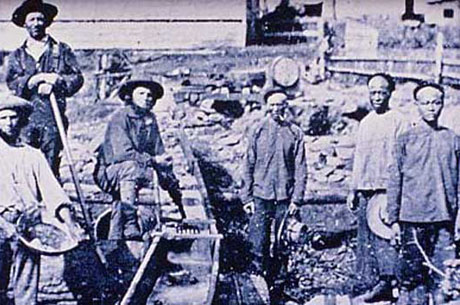
In this class we have paid a lot of attention to other cultures, religions, and ways of living. However, we have not given a lot of time – until the last couple of weeks – to the difficulties of immigrants living in America. I am studying this in my history class right now, as we learn about the immigration boom in America during the 19th century. Back then, people from China, Mexico, and other countries moved to America to pursue a better life for their families. Not for themselves. They were put to work on railroads, in factories, and at other jobs that involved unskilled labor.(image courtesy of: http://www.goldsea.com/AAD/Milestones/railroad.jpg). They were paid next to nothing and – because this was before any sort of labor laws or unions were in place – were outrageously overworked. Most of them, history has shown us through letters and novels, hated their lives in America, but stayed to give their children the opportunity to capitalize on being 1st generation Americans (as many immigrants gave birth to children once they had moved to the US). (I google-image searched the word "immigrant" and this is what I found. How can we expect immigrants to WANT to be here when we are the opposite of welcoming to them?! image courtesy of: http://latimesblogs.latimes.com/photos/uncategorized/2007/03/26/immigrant_rally.jpg). In many cases, their children did adjust extremely well and moved up in the workforce, eventually making great amounts of money and raising their own families. That is, of course, the story of why America is the land of opportunity and the great melting pot.

However, though I know the stories of the distant past through my history class, I had not stopped to consider that this struggle of the immigrant was still occurring during the 20th century setting of The Woman Warrior – or that it might still be happening today. When reading about Kingston’s mother, Brave Orchid. Kingston talks about how her mother and father both knew of the communist troubles their former home was undergoing and that it would not be safe or practical for them to return. Yet, Brave Orchid longs for her old friends, her old status as a doctor, and her old life. Said she, “This is terrible ghost country, where a human being works her life away. In China I never had to even hang up my old clothes. I shouldn’t have left,” (Woman Warrior, 104). Her daughter attempts to reason with her, saying “If you hadn’t left, there wouldn’t be a me for you to support, Mama,” (Woman Warrior, 104). Still, Brave orchid complains about the pace of life in America, saying “Human beings don’t work like this in China. Life goes slower there,” (Woman Warrior, 104) and insists on labeling every white person she sees as a “ghost” of some form. Yet, though she complains of the faced-pace days in America, she has done a better job adjusting than perhaps she even knows, as she is able to work and do a lot of household jobs while her sister, Moon Orchid, newly immigrated from China, can do very little. Kingston even describes how Brave Orchid grows impatient with Moon Orchid’s inability to do even little tasks in a timely manner and, Kingston notes that eventually Brave Orchid gets so frustrated she says, “’Go take a walk!” and Kingston describes her as “exasperated,” (Woman Warrior, 137). Her daughter, on the other hand, considers America to be where she belongs, which one would think would be what Brave Orchid desired for her family. Instead, she continue to bemoan her situation and wish for her life back home. This is understandable, to me, but still heartbreaking. I cannot imagine giving up my entire life to come to another country where I would be completely unhappy. I cannot imagine my own country becoming so dangerous that I had to leave. I cannot imagine giving up everything I love for my children – and then not valuing my little girl because she was a girl. But that’s just that: I cannot imagine it. So I cannot judge Brave Orchid on her decisions or attitude or the way she makes her daughter feel, I can only take notice of the way she handles things and try to learn more about what made Brave Orchid the way she was and how that shaped Kingston’s life and memories.

Thursday, April 22, 2010

Woman Warrior 1

I am all about Woman Warrior right now. As soon as I opened this book and read the opening line from Kingston’s mother to a young Kingston, “You must not tell anyone what I am about to tell you,” I was enraptured by this biography/memoir/novel/masterpiece (Woman Warrior, 3). Of course, since Kingston proceeds to tell all of her readers exactly what her mother tells her, it is an extremely powerful and ironic first sentence of a story that is all about breaking the rules. Kingston, I quickly realized after picking up the book, is the woman warrior she names her book after. (I find myself in awe of Maxine Hong Kinston and her life. image courtesy of:http://latimesblogs.latimes.com/photos/uncategorized/2008/04/27/hong.jpg).

I feel a special kinship to Kingston. Though my situation was nowhere near as dire as her own, I can relate to her suffering of being of the unwanted sex in her family and culture and her actions of make-believe in a small way. My grandmother had a very sad life. She suffered from bipolar disorder and alcoholism and was a woman, on top of all that, who was very set in her ways. Her children don’t talk much about it but I can sense that life at home with their mother was not something they look back upon fondly. My father (her son) was supposedly the golden child because he was the only boy out of 4 children – and my grandmother wanted only boys. Something about the importance of the last name passing on, for antiquated reasons similar to that of the Chinese culture Kingston grew up amidst – made my grandmother say something to my mother (her daughter-in-law) just after she gave birth to me that has always stuck with my mom. I was 7 pounds 0 ounces lying in my mother’s cradled arms and my grandmother looked down at me then back up at my mother and said, “I’m sorry it wasn’t a boy. Hopefully next time.”How can you look at a little baby - especially one as cute as me ha ha - and say something like that? Luckily for me, my parents never once bought into the ideology that "boys are better".(My dad holding me as a baby. image is author's own.) Naturally when my brother was born two years later, she was overjoyed. Holidays were pretty much the only times I saw my grandmother but those were painful on their own. My brother would receive kisses and laughter and gifts like a massive train set that spanned the entire house while I – desperate for some of my grandmother’s attention – would only be noticed by her if it involved some kind of scolding for eating all the caviar and my gifts would include a used paperback book. It sounds crazy, but that’s how it was. I think she loved me, but I think that her mental disorder and her old fashioned beliefs of right and wrong got in the way of her being able to show me.(I did not feel loved by my grandmother, but I think that deep down she loved me. image is author's own.) Kingston feels the same sentiment when she explains, “from afar I can believe my family loves me fundamentally. They only say ‘when fishing for treasures in the flood, be careful not to pull in girls’,

“ (Woman Warrior, 52). In this sense, I was luckier than Kingston, who had to deal with rejection all around her based on being a girl and not just from one person. She says, “I read in an anthropology book that Chinese say, ‘girls are necessary too’; I have never heard the Chinese I know make this concession,” (Woman Warrior, 53).

To escape from that, I sometimes played what my mother called my “imaginary games” where I would run all over the backyard pretending to be someone else. Some days I was a basketball star, other times I was a strong female character from a Disney movie like Mulan. When I read that Kingston imagined herself as Fa Mu Lan “the girl who took her father’s place in battle” I was amazed that we had both resorted to the same fantasies about ourselves to give us strength (Woman Warrior, 20).(I used to pretend to be the Disney version of Fa Mu Lan - a strong woman warrior herself. image courtesy of:http://www.uweb.ucsb.edu/~courtney_hendrickson/mulan8.jpg). Both of us refused to see ourselves – even in our fantasies – as anything less than a strong, powerful woman. Regardless of what those around us wanted us to be. I am proud of young Kingston and her refusal to roll over and assume that she should believe what her family and culture tells her about being a girl. I am excited to continue reading and see what other stands she takes in her life against injustice.

Tuesday, April 20, 2010

It matter and it doesn't.

“Race matters. And it doesn’t” (Course Anthology, 866). So says the quote from Anthony R. Luckett in his personal story of growing up as an Asian American student and foster child in America. When reading through his story and the story of others, like Johnny Lee, I decided to make another perhaps bold statement of my own: Sexual orientation matters. And it doesn’t. Lee tells his own story in “No Such Thing” detailing the pain he had from hiding his homosexuality from everyone around him – including his mother – and how difficult it all was for him. “Back then I did not tell anyone what I was going through because I did not want to be seen as evil.” (Course Anthology, 869). He turned to internet chat rooms which, “became an amazingly refreshing release for [him]. For the first time [he] found a way to talk to other people like [himself],” (Course Anthology, 870). He also found himself at a crossroads with his decision to keep his sexuality hidden when he ended up at a man from the chat rooms’ house nearly getting raped and murdered. At that point, he realized something: “hiding my homosexuality from the world was only going to bring me grief,” (Course Anthology, 872). After he ends up remorsefully admitting to his mother that he is gay, he explains that “I became overwhelmed by a combined sense of relief from having shared this enormous secret and regret for allowing those words to escape from me,” (Course Anthology, 872). His mother’s response? “I don’t believe….I don’t believe….No such thing as the gay Korean. You are lying. There is no Korean gay…” (Course Anthology, 873).

Up until taking this class, I thought my Iife was pretty hard. I was not the smartest in my class – or anywhere near – at a highly competitive high school where grades are analogous to your self worth and got a lot of grief about that from both my parents and my classmates. I was a good swimmer but I suffered from a back injury that forced me – so I thought at the time – out of the sport completely. My brother has all kinds of behavioral problems that make family holidays like Christmas a really upsetting thing. But after taking this class and reading accounts like Johnny Lee’s I have to understand that I have NO idea what “hard” actually is. The truth is, I have lived a relatively charmed, cushy life. I have a few problems, who doesn’t? But I have never had to harbor a secret like Johnny Lee. The kicker of Johnny’s secret is that he is not hiding something he did wrong, nor is he even hiding something he DID at all. He is hiding something that he was born with, like an ugly birthmark or something.(Like a birthmark, Lee's sexuality was something that he could not control but felt he had to be ashamed of. image courtesy of:http://www.makeupsfx.co.uk/products/davysil/davysil_images/birth_mark_02_big.jpg).That his mother decides to bring race into the equation when she tells him that he simply cannot be a gay Korean is something I can barely comprehend, it is so painful. Vincent Ng aptly sums up the combination when he explains that, “The deeper friendships I began to form led to more honest self-disclosure, and I really began to question what it meant to be both a Chinese Canadian male and a sexual being,” (Course Anthology, 884). I personally don’t know the answer to that question, but then again I had never even considered that it would be a question – for I myself as a straight, white individual have never had to deal with the rejection and pain not just of struggling with my sexuality but of reconciling it with my race and culture and lineage – something that is especially important, I have come to understand, in Asian races.

Race matters. Sexual Orientation matters. And yet they don’t. I don’t mean to go all groovy 1960’s on everybody, but so many of these young men’s problems could have been solved if their parents had just LOVED them and not judged them.(Image courtesy of: https://blogger.googleusercontent.com/img/b/R29vZ2xl/AVvXsEggvRI3LOORmO7rces-xqRgYYpQBO6OwGjNZJuxT4jPE1u8Ly0sv78i_w21OcAO1MftCBC_RCetp6mi8165qfRhd3_eAdmPZve2saurZex5Ioe77z8smyHQF5CQyOMRFetS43RyblJt_ks/s1600/hate-crimes-stop-hating.jpg). Each of these men realized that once they came out of the closet or accepted themselves for their race or sexuality or both, life got a lot easier. They realized that neither quality had to define them. I have a great deal of admiration for the individuals I read about tonight and am grateful they decided to take a stand to tell their stories – not just for the gay youth that will hopefully gain strength from them, but for people like me who never comprehended the difficulties of the combination of race AND sexual orientation.

Thursday, April 15, 2010

Inspired

I have to say that in reading the three stories of diversity assigned to us, I felt myself become more and more inspired as I read each of them. Especially inspiring was the story of Allesandro Melendez’s life growing up as a Puerto Rican living in Connecticut attending a difficult and exclusive prep school.

The description of the school reminded me to my high school.(A prep school can be a very intimidating thing for anyone, like mine, shown above. image courtesy of:http://www.boardingschoolreview.com/photos/large_2_54.jpg). Melendez explains that Lewisberg prep school was a, “predominantly white and wealthy environment,” (Course Anthology, 857) which was the case with my high school as well. My school also had day students and boarding students, just as his did. So naturally, I began to picture myself back at my school, traveling through each year of high school just as Melendez did. I began freshman year as a new student at my prep school and felt, just as Melendez did, that “prep school was a whole new world for me,” (Course Anthology, 855). I was completely out of my element and terrified, just like Melendez who began to feel that, “I just don’t belong in this place, everyone here is smarter than I am,” (Course Anthology, 855). I felt the exact same way, but as I read this book today I realize that Melendez had one extra fear: “They’ll just laugh at me if I speak in my Spanish accent,” (Course Anthology, 855). That’s when my respect for Melendez began to grow. As I flipped through my years of high school in my mind I thought of the all-nighters I had pulled, the math problems I had struggled over, the science experiments I had performed in my backyard. Then I took the stress and the difficulty of that work and multiplied it by about ten, and I think I accurately understood what Melendez was going through. I honestly cannot imagine attending an entirely new and difficult school while still struggling with English, with being the only member of your family able to be “handl[ling] all the financial, academic, and commuting arrangements,” (Course Anthology, 853). The thought is both terrifying and exhilarating – terrifying because I don’t know that I could ever juggle so much and exhilarating at the thought that maybe I actually could. I would imagine that was probably close to how Melendez felt.

Allesandro Melendez could have failed out of his prep school. He could have worked just as hard as he needed to – as I was sometimes guilty of in high school – or he could have abandoned his racial pride entirely in order to please the white community around him and become “one of them”. Miguel Ramirez could have conceded to defeat when he realized, as he said "the United States was home, but it wasn't mine," (Course Anthology, 837). Norma Andrade could have given up hope when she was forced to take on cleaning jobs that "society [had] taught [her] to respect the jobs of lawyer, doctor, and professor and to look down on the kind of work [her] mother did," (Course Anthology, 848). Instead, Allesandro managed to work as hard as possible to make good grades and become the best while still holding onto his identity as a Puerto Rican.Ramirez and Andrede both put aside their own stereotypes and prejudices that were limiting their successes and eventually became more successful than they could have been in their wildest dreams.(Melendez can call himself both a Puerto Rican AND an American. image courtesy of:http://mentalfloss.cachefly.net/wp-content/uploads/2008/05/puerto-rico-flag.jpg). It’s stories like his that make us realize just how difficult the life of an immigrant can be and also just how important his efforts are not only for Puerto Ricans but for all races – white included – who can become inspired by his work ethic, determination, and pride.(ALL races. image courtesy of:http://blogs.freshminds.co.uk/talent/wp-content/uploads/2009/03/diversity02_transparent.gif).

Tuesday, April 13, 2010

The Bluest Eye 3

Writing, I have come to realize through this class and especially through my reading of Toni Morrison’s the Bluest Eye, is truly a universal language. It allows us to put our feelings to paper in a way that is more satisfying than talking to oneself and yet also just as private. It gives me personally an outlet for my feelings that I utilize not only because, as I always say to my friends, “I’m better on paper than in person”, but also due to the fact that writing is permanent. That permanent aspect can give us the advantage of perspective which, in turn, helps us find our way in terms of not making the same mistakes over and over again. Writing becomes like history that way.

Morrison’s work, I realized, is not only her outlet for recording past memories and experiences – it is a way for her to get answers to questions she has had for a long time. She explains in the afterward of the novel that she once had an experience with a beautiful African American friend who claimed to want blue eyes more than anything in the world. “The Bluest Eye was my effort to say something about that; to say something about why she had not, or possibly ever would have, the experience she possessed and also why she prayed for so radical an altercation,” (Morrison, 210). Decades later, Morrison was left with so many questions about the young girl and the racial, social, and physical barriers that caused her to feel such a way. “Who made her feel that it was better to be a freak than what she was?” Morrison questions (Morrison, 210). Writing this novel was not only Morrison’s way of searching for these questions within herself, it also served as an education for any and all readers with self-esteem problems stemming from race or beauty or any combination thereof. (Blue eyes; coveted. image courtesy of:http://theaterboy.typepad.com/theaterboy/Bluest%20Eye%20%232.5.jpg).

I figured I could cover the “basic” topics for this DB. Talk more about why Morrison wrote the Bluest Eye or ask myself more about race and beauty. Don’t get me wrong, those are important topics. But what stuck with me the most after finishing this novel was how a writing choice Morrison made in the novel affected my entire view of a man, a family, and a race of people. In one of the later chapters of the book, the story of Cholly Breedlove is told in full. His life as a boy with a beloved Aunt who died when he was young is detailed, as is his horrific experience as a victim of two white men who force him to continue to have sex with a young woman as they watch. As we all know, the book come to a near close with Cholly raping Pecola. If someone had told me the summary of this book – leaving out Cholly’s family history told from his point of view – I would have been completely disgusted at his rape of the little girl. I probably would have been disgusted to the point that I would write Cholly off as an insane man. However, Morrison made a choice when writing about Cholly’s life story and the rape of Pecola to tell it from his perspective, as opposed to Pecola’s. Instead of describing Pecola’s feelings during the rape, Morrison writes, “The sequence of his emotions was revulsion, guilt, pity, then love. His revulsion was a reaction to her young, helpless, hopeless presence,” (Morrison, 161). Of course we know that the rape is a terrifying event for Pecola, but I would never have guessed how confusing it was for Cholly – a man whose brain and soul are completely backwards and skewed thanks to the white men who ruined his life with their despicable actions. “Whether her grip was from a hopeless but stubborn struggle to be free, or from some other emotion, he could not tell,” notes Morrison of his confusion, (Morrison, 163).(image courtesy of:https://eee.uci.edu/programs/humcore/Student/Fall2009/LectureNotes/week10/Toni-Morrison-abstract-image-Pecola.jpg). I of course am not condoning Cholly’s actions or calling them anything other than despicable, but I do think it is important to note that thanks to Morrison’s writing decision, the story takes on new meaning and helps me as a reader realize just how deep racism can go and just what kind of affect it can have on people for the rest of their lives just as it did with Cholly.

Monday, April 5, 2010

The Bluest Eye 2

One thing I have learned in reading Toni Morrison’s The Bluest Eye is how little I truly knew of the details of racism prior to reading this book. Of course I understood the concept – but having grown up in a relatively sheltered community with a very open-minded family surrounding me, I have never had the experience of witnessing racism directed at any particular person or group. Nor have I had it inflicted upon me. Morrison is incredibly gifted not only at telling one of a billion stories of racism clearly and effectively, she is able to do so in a way that people like me – with little firsthand experience regarding the subject – are able to not only grasp the deeper meaning of the story but can actually put themselves in the shoes of the characters in the novel.(image courtesy of:http://www.lemel.co.il/global/racism.jpg).As professor Bump himself notes in his article on race and appearance in the Bluest Eye, “I would suggest that ultimately [the thing] is judging by appearance, and that Morrison focuses on ugliness to enable white readers to feel something of what it is like to be judged by racial hierarchies of skin color and the master and family narratives that reinforce them,” (Course Anthology, 332).Essentially, as a result of Morrison’s writing and storytelling talent, I find myself feeling the pain of each of the characters uniquely; not a fun experience, but probably a necessary one for me.

Particularly, I find myself feeling for Claudia and Pecola, especially when it comes to their self-esteem, which seems to be continually brought to a lower level with each “life experience” they undergo. Last class I wrote about Claudia’s hatred for a white doll she received as a gift and about how her intense hatred for and jealousy of the doll drove her to destroy it.(Claudia HATED her little white doll - for many reasons that later bled into her real life with real white individuals and "whiter" African American girls like Maureen . image courtesy of:https://blogger.googleusercontent.com/img/b/R29vZ2xl/AVvXsEgjLfz83V1vwO6b5sZuckfh8TL35EEYNRpNpcFc7QVYsFAJqPlYQnt_kswhItw3uPHddFxfS2bFUf037-VmBF77KCcTKXGNz1EQN4xXXLzYgoH13KpWfCOHqbsrcN4oDY-eWOFn3cgIghM/s320/Bluest+Eye+Web+Image.jpg). So, when I read about Claudia and Pecola’s interactions with Maureen Peal – the lighter skinned African American student whom the girls were both mystified by and jealous of. Though they get along originally, Maureen’s constant questioning of the girls eventually leads to a full-scale argument, where Maureen ends up shouting at the girls, “I am cute! And you ugly! Black and ugly black e mos! I am cute!” (Morrison, 73). When I read this, I admit I was surprised. Ignorantly, I had never understood the concept of racism within a single race. Now I see that not only does it exist, it is probably more painful than racism coming from an outside race. I could almost feel Pecola’s pain, which Claudia describes in this way: “[Pecola] seemed to fold in on herself, like a pleated wing,” (Morrison, 73). I finally understood the line from earlier in the chapter about Maureen, that she was “someone who splintered the knot into silver threads that tangled us, netted us,” (Morrison, 62). For someone of their own race to make fun of Pecola and Claudia for being “too black” must have hurt doubly because it was as if one of their own had turned on them – effectively splintering that aforementioned knot.

Another part of Maureen, Claudia, and Pecola’s conversation that affected me the most and truly saddened me occurred after Maureen yelled insults at the girls. Claudia at one point muses, “we were sinking under the wisdom, accuracy, and relevance of Maureen’s last words. If she was cute – and if anything we believed she was – then we were not,” (Morrison, 74). "Many emotions, including shame, are generated by comparing someone with an ideal, making them seem less than, inferior, a mistake," notes Professor Bump (Course Anthology, 332). I can honestly say that Pecola's pain in this instance and Claudia's plummeting self-esteem was painful for me to read. Just because some girl decided to spew pointless racial stigmas and insults to get a rise out of these girls, Claudia and Pecola will be mentally and emotionally damaged forever. Not fair isn't strong enough to describe this.

I know that the day after tomorrow I will again crack open this book and begin to read more of the struggles of Pecola and Claudia just to survive. I know that it will be painful. But I also know that because Morrison is talented enough to make someone as naive, innocent, and sometimes plain-old ignorant as me feel this pain, I will benefit from learning about this time in our history. If for no other reason than to make absolutely certain that I do not allow history to repeat itself.

Thursday, April 1, 2010

The Bluest Eye 1

Toni Morrison’s The Bluest Eye is – thus far in my reading – not an easy story to swallow. It details poverty, abuse, racism, and other such tragic themes. When I learned what the book was about, I figured I would probably write a blog entry about family – about learning to live with all types of personalities in one family, or possibly about family sticking together through thick and then. Then I read the book. It is true, what Professor Bump says about the new “typical” family story: “From the perspective of family systems therapy, the motivation for narrative is no longer defined as primarily a potentially dysfunctional nostalgia for an ideal family that never was,” (Course Anthology, 349).(The Bluest Eye is NOT the story of a perfect family. image courtesy of:http://www.cm.iparenting.com/fc/editor_files/images/115/ipgraphics/familylove/fal005.jpg).For, where we are so far in our reading, the whole “sticking together” and maintaining family unity thing doesn’t seem to be a priority for the Breedlove family. Of course, it isn’t necessarily their fault; mental and physical abuse is scattered throughout the family and is also directed from those outside the family. It would be hard to survive in such an environment, much less become united through it. No, what the characters in this novel do best isn’t stick together as a family. Their most striking quality, for the most part, is an uncanny ability to misdirect anger from one situation to another.

I first noticed this when I read about Claudia’s hate for Shirley Temple and for the “big, blue eyed Baby Doll” she had received for Christmas one year (Morrison, 20). She recognizes that she is supposed to love it and care for the doll, that the adults around her expect her to. “I learned quickly what I was expected to do with the doll: rock it, fabricate stories situated around it, even sleep with it,” (Morrison, 20) she remarked to herself. I myself was confused by her reaction to this doll, until I realized the doll was white. “I destroyed white baby dolls,” says Claudia simply, after explaining her destruction of the toy (Morrison, 22). She herself recognizes, however, the deeper meaning behind this. It is not that she hates white people without meaning – she hates them because she hates her own life. Her jealousy (though that seems too petty a word for the emotion Claudia feels, I will still use it as I cannot rack my brain for a better one!) at the life of the white girls causes her to hate that doll, Shirley Temple, and anyone not like her that she can find. (image courtesy of:http://www.cherishedfriends.com/g6BL_ClubDoll_Blonde.jpg).

This misplacing of anger is a theme that continues on in Cholly’s treatment of Mrs. Breedlove. We learn in the story of a traumatic experience Cholly undergoes as a younger man. Two white men force him into having sex with a woman while they watch and instead of hating the two men, he ends up hating the young woman. “Even a half-remembrance of this episode, long with myriad other humiliations, defeats, and emasculations, could stir him into flights of depravity that surprised himself – but only himself,” (Morrison, 42). This redirection of his anger continues in his actions of abuse against Mrs. Breedlove. It is tragic, unfortunate, horrible – any number of words can describe his abuse towards Mrs. Breedlove, but we must also recognize the horrific acts of the white men that so scared Cholly into choosing the path of abuse he is on now.

Monday, March 29, 2010

Black Elk Speaks 2

Ever since I read a couple of students’ opinions in this class on the similarities between Black Elk Speaks and the motion picture Avatar, I have been fascinated with the parallels between the two stories. Both tell stories of a native people extremely in touch with and grateful for the nature around them. Both are about a nation of individuals misunderstood by those groups of people around them and both threatened by those groups. Both nations are very spiritual, filled with gratitude and reference for their ancestors who came before them. As a result of this, in my own mind I have created the same visual picture of the world in which Black Elk lives, hunts, and despairs in as the world of Pandora in Avatar. Let me tell you, it has made Black Elk Speaks that much more of a great read for me, because I feel like the story itself is even better when I picture him riding a huge, majestically blue horse in 3D!(I'll be honest, Black Elk Speaks is a much better read when you picture all the action happening in a beautiful place like the setting in Avatar. image courtesy of:http://www.scifiscoop.com/wp-content/uploads/2009/07/avatar_new_1.jpg). But, I digress. I wanted to speak now about a couple of my favorite similarities between our reading tonight and Black Elk Speaks. The examples I cite are not necessarily the most obvious examples nor the most important, some might argue. They are simply the instances in which I felt that the scene in Black Elk Speaks fit perfectly with the Avatar-esque 3D vision in my head.

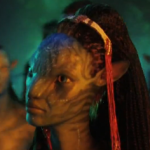
“Before this, the medicine men would not talk to me, but now they would come to me to talk about my vision,” Black Elk says in the excerpt (Black Elk Speaks, xx). As soon as I read that these Native American peoples had medicine men, I was transported back to Avatar and reminded of the Navi character Mo’at – the Navi’s spiritual leader and Neytiri’s (a main Avatar character with whom the main human character Jake Sully falls in love) mother. She was the sort of “medicine [wo]man” of the Navi people – reminding me again of James Cameron’s attempts to make the human’s view of Navi relatable to old and outdated caucasian views of Native American’s. (This is a picture of the character Mo'at - the Navi's unofficial medicine woman. image courtesy of:http://amaliehoward.com/wp-content/uploads/2009/12/Moat-Copy1-150x150.png).

The other portion of Avatar that I felt connected very strongly and uniquely with the story told in Black Elk Speaks was the climax of the movie. In Avatar, the main concern of the Navi was not that they themselves were going to be potentially killed by the humans, but thattheir nature, their land, and especially their “tree of souls” would be destroyed. This instantly reminded me of the quote in Black Elk Speaks that says, “If a man or woman or child dies, it does not matter long, for the nation lives on. It was the nation that was dying, and the vision was for the nation; but I have done nothing with it,” (Black Elk Speaks, xxi). It was the same for the Navi – if their tree of souls, where the links to their ancestors were stored, was destroyed – it would be worse than if they themselves had died. It would wipe out the spiritual connection between themselves and their ancestors, effectively killing their nation. Humans with machine guns, helicopters, and more were coming to attack them and destroy their people but their concern was with the nature and tree surrounding them for they knew that was where the heart of their nation lay. (Human attack was coming to the planet Pandora. image courtesy of:http://venturebeat.com/wp-content/uploads/2009/11/avatar-2.jpg). Finally, this sentence reminded me of another important scene in Avatar: Few Tails now told me what I was to do so that the spirits would hear me and make clear my next duty. I was to stand in the middle, crying and praying for understanding," (Black Elk Speaks, xxii). When the fabled human attack did eventually come to Pandora and it seemed that all hope was lost for the Navi, Jake sully performed a similar "hail mary" type of act when he sat beneath the tree of souls and begged for guidance from his ancestors - a request that every single Navi thought was futile. Eventually, however, this tactic worked out in some way for both Black Elk and for Jake.

Thursday, March 25, 2010

Black Elk Speaks 1

In this class, we talk about animal cruelty, about compassion, and about how we as humans can make the unified decision to end cruelty to creatues beneath us. We have watched Earthlings, visited PETA demonstrations, some of us have even converted to vegetarianism in an attempt to support our (mostly, ahem, Jose) shared convictions about treating the creatures and land around us with as much respect as possible. I was assigned to read Black Elk Speaks and connect it with what we have learned this class. The excerpts I read were filled with just about everything that goes against what we have learned this year, with sentences like, “When [the bison] went down, I got off my horse and began butchering him myself, and I was very happy,” lining the pages (Black Elk Speaks, xi). However, I could find no room to critique this narrative, no place to take a holier-than-thou stance against the author or those in the story. This is for the simple fact that the Native Americans in the story are experiencing nature and animals in a different way than I could ever imagine and I believe they are doing so in the most respectful way that they can.

I would imagine that many of us who read this sentence: “They were all nearly naked, with their quivers full of arrows hanging on their left sides, and they would ride right up to a bison and shoot him behind the left shoulder. Some of the arrows would go in up to the feathers and sometimes those that struck no bones went right straight through. Everybody was very happy,” are reminded of the image of the butchers and circus trainers in the documentary Earthlings (Black Elk Speaks, vi). These individuals were boisterous, vocal, and many even joyous when it came to hurting or killing helpless animals. I admit, when I first read about the bison hunt described in the excerpts, my heart did beat a little faster out of anger. That’s when I realized – how can I judge these people? They NEED the bison as a way to survive. There is no way around it. No grocery store, no meat packing plant, no vegetarian lifestyle has even been introduced to them. The fact is simple: they need this food, this hunt, to survive. I get pumped up for swim meets by listening to music, nodding my head back and forth as I stretch, and pounding on the starting blocks before my race. If I didn’t do all that, if I didn’t get nervous before a race, and if I didn’t celebrate afterwards then it would probably be a lot harder to be motivated enough to swim fast. That is what I think these Native Americans are doing – pumping themselves up.(I see the Native American's joy after killing bison not as inhumane like the workers in Earthlings were, but merely as elation like an athlete might have after winning a very important match. image courtesy of:http://thumb11.shutterstock.com.edgesuite.net/display_pic_with_logo/58667/58667,1225126464,1/stock-photo-a-young-sporty-asian-tennis-player-screaming-in-joy-of-victory-19563484.jpg). Of course they are going to be excited after killing bison – they are able to survive for one more week on that food. When life is a day-to-day guessing game of whether you are going to have the food to make it through the next week – for you and your family – then I think I can allow myself to be a little more understanding of their predicament. "Now you shall walk the black road with these; and as you walk, all the nations that have roots or legs or wings shall fear you,” a voice tells Black Elk (Black Elk Speaks, vii). I can understand also how this could be read as a lack of respect for the nature and animals around them, but I personally see it as a notion they need to maintain in order to keep up good spirits for hunting. If the Native Americans instill any fear or doubt in one another about their power over their animals – their food – who knows what may happen. I would see unsuccessful hunts in their future, simply because they would be “psyched out”.

This is not to say that they don’t respect their environment in their own way. Black Elk talks about his surroundings in nature with awe when he notes that, Then there was nothing but the air and the swiftness of the little cloud that bore me and those two men still leading up to where white clouds were piled like mountains on a wide blue plain, and in them thunder beings lived and leaped and flashed,” (Black Elk Speaks, iii). They also choose to pray to a “holy tree that should stand in the middle of the dancing circle” – one that reminded me very much of a massive tree in the motion picture Avatar that was used for a similar purpose among a people who also believed, like Black Elk, that their ancestors were the key to understanding the world around them (Black Elk Speaks, viii).(The holy tree in the Black Elk Speaks excerpts reminded me of the Tree of Souls in the movie Avatar, which carries very similar themes and meaning. image courtesy of:http://luckybogey.files.wordpress.com/2009/12/avatar6_185x185_656614a.jpg).

Though I had my doubts originally, I can honestly say I have respect for the story of the people in Black Elk Speaks and I understand their behavior under their unique circumstances. I am grateful for having read and learned about their lifestyle not only because it allows me to appreciate my own but because I believe it can only be good to look at issues I feel strongly about from many different points of view.

Monday, March 22, 2010

My Leadership Vision (P4)

He looks directly into your eyes when he tells you his secret. Your feet are dangling in the nearly scorching hot tub, eyes glued to his face, your finger nervously scratching against the cold cement of the pool as you listen to him weave the story of his hidden life with the life you know, his words interlaced amid embarrassed pauses and tardy apologies. Stale chlorine and leftover cigarette smoke fill the room and you’ve got the distinct feeling that you’re in some sort of really bad soap opera, or at least a reality television show prank. There is simply no way that your best friend of four years is telling you that he is gay as you perch awkwardly on the side of a grungy hotel hot tub at midnight on a Sunday in the middle of San Antonio freaking Texas. “It’s just something I’ve known forever,” he tells you, still looking straight up into your frozen face. “I’ve spent my whole life trying to push it out of my mind, to pretend that it’s not who I am, but it is. I’m sorry I didn’t tell you sooner,” he emphasizes the last bit and grabs your hand for effect. You both notice at the same time that your finger is bleeding; raw from the monotone scratching it’s made against the hard cement of the concrete below you for at least an hour now. You examine it and realize that you don’t feel the pain. You’re numb, maybe. You dip the open sore into the murky water and watch as the blood forms thin ripples around your finger; thick scarlet circles threading into each other wildly, never dissipating. He is talking now about all his experiences, the freedom of finally getting to be himself, of how his coming out over the past few months has made him actually feel whole; you’re not really listening, though, because you can’t. How cruel is the world that you can’t feel your swollen and throbbing finger, but every word he says is piercing through you with a force that actually leaves you struggling to breathe normally? You prefer the pain of your finger. He slows his story as you nod at the right times and offer an encouraging smile when you can, and you know you’ve never seen him this peaceful before in your life. You study him and try to remember how it felt when you didn't know him as anything more than a kid at swim practice. You try to remember how it felt to be around him before you had bonded together, grown together, laughed together through years of middle school and now high school. Like maybe if none of that had happened then none of this would be happening now. And now he’s pausing long enough to allow you a few words, but the only ones your brain can muster are speckled with cliché phrases like, “support you no matter what”, “so proud of you”, “this must be difficult” and you know this has to be some kind of messed up soap opera for real now. The truth is you’re not ready for this, not yet. You need time to process, time to understand, and time to accept. You can’t do any of that right now. You are so happy for him, and you are so proud of him (I am, I am), but you’re also completely unprepared for this.

I wrote the above narrative a couple of days after the incident being described occurred. I was just sixteen years old, incredibly naive, and confused by my friend’s admission that he was gay. I didn’t know what to do so I decided to write about it in my diary. The actual diary entry spans six whole pages of words – some coherent and organized like the paragraph above, others were simply random words, poetic rants, and nonsense. It’s hard for me to go back and read what I wrote during that time not only because I hate to remind myself of my ignorance back then but because it’s hard to remember a time when I was so intensely uncomfortable with myself. I did not like or accept my friend’s confession, and deep down I just could not understand why this was the case. All I knew was that the actual act of sitting down, taking a deep breath, and putting my words to paper was the only thing that made those feelings subside.

Looking back, I am embarrassed at my unwillingness originally to accept that my friend was gay. I have given a lot of thought to why I resisted for so long and I have concluded that much of it is due to my upbringing. I was raised in a Christian church and attended a Christian school from elementary school all the way through 8th grade. There I was taught that not only was homosexuality was a sin, but anyone who supported or accepted the homosexual life was essentially condemning themselves to hell. Though I have a family who does not believe this, my parents never exactly went out of their way to teach me their beliefs on the subject. I struggled for a long time to reconcile what I was taught about homosexuality and what I was supposed to believe as a Christian. I read articles online, watched the news, and talked with friends who had differing opinions on the subject. I got caught up in the debate of whether homosexuality was a choice or a God-given trait - and even considering the latter put my entire view of Christianity in jeopardy. My dad always used to tell me that Jesus’ main mission statement was to teach humanity the concept of love, compassion, and forgiveness. How, then, could I obey what I had been taught as God’s so-called belief about homosexuality being a sin doing as Jesus wanted us to do – love? All of it ended up making my head spin and left me feeling more confused and angry than ever.

Then one day I began to ask myself the questions that really mattered. Why should I condemn my friend simply because of his sexual orientation? Why should I treat him with any less respect than I would a heterosexual friend? That’s when I realized something that changed the way I look at almost everything controversial in this world. I realized that just because my friend was gay (of course, he had been all along, but it was as if he was newly gay to me at the time) didn’t mean he was going to change. I took my thoughts of my own selfish head, stopped considering my own personal beliefs, and began to realize what was going on in the world around me regarding homosexuality. I came to the conclusion that it is simply unconscionable to treat a gay person with any less respect than you would a straight person. I came to the conclusion that it was not right to deny a gay person any rights that you would give a straight person. I came to the conclusion that when it came to homosexuality, I didn’t have to have all the answers to make the right decision. I came to the conclusion that I loved my friend no matter what and I would make it my own personal decision to support him.

We are all equal, I believe. (image courtesy of http://www.blogger.com/post-create.g?blogID=6691590003341034159).

Of course, this realization took time. Truth be told, my exploration of my beliefs in this area is still not complete. A lot of what has aided me in my quest, however, is what I have learned this year at the University of Texas. Before I began this Plan II World Literature class, I had never been so challenged to put my beliefs in front of people. Leadership – one of the core values of this university and this course – had evaded me prior to taking this class, especially when it came to expressing my own personal beliefs regarding religion, compassion, and the rights of humans and animals. Our almost daily blogs where we were forced to pick a stance and support it – often regarding very hot-button subjects – helped me find the courage to address within myself and to you as a class that I do support homosexuality and want to use my newly acquired leadership skills to take a stance in supporting it. However, I worry that the emphasis this course has placed on STATING MY UNEQUIVOCAL OPINION has made me too self-assured, at times, in my own beliefs. I always want to keep in mind that there is more than one way to look at things and this class sometimes instills in me the opposite - that whatever I believe in enough to write a blog about must be true. I need to be careful of this hindrance to my ability to lead clearly and fairly.

Another class that has aided me this year was my freshman TC: Emerging Selves. The class studied the autobiographical impulse in women’s writing and I not only learned to improve my writing skills greatly, but I got to research incredible women who were all pioneers of literature and feminism. It might sound corny, but many of those incredibly strong women have become my role models. Of course, it didn’t help that my incredible teacher taught me new and interesting styles of writing and story-telling that I had never before considered. My teacher and the incredible female authors I studied each taught me that the power of writing – the power of words alone – is a mighty force.

So, what now? I have been through quite a journey to be sure. What began as a teenager’s desire to please her family and school while still treating a friend with kindness has transformed into something I am passionate about. I know the struggles that my friend went through and is still going through and though he is thankfully surrounded by loving people who support him no matter what, I know that many gay youth are not so lucky. I would like to explore opportunities while still here at UT to help gay youth understand that they are loved. Possible ways to do this would be helping out with university suicide hotlines and perhaps even just standing around near the FAC handing out flyers informing gay youth that it is OKAY to be homosexual – and even to be proud of it!(This image I found when searching for LGBT hotlines. image courtesy of:http://lgbtawayout.com/images/telephone-450.gif). However I feel that my efforts would best be utilized in educating people like me in the facts of homosexuality and helping those who have friends or family who are gay. I know that I have cultivated an ability to be a leader and I would like to use that in helping support the gay cause. I have recently begun researching student LGBT (Lesbian Gay Bisexual Transgender) organizations and found one here at the University of Texas OUTlaw which is affiliated with the law school. If I could somehow utilize the resources of one of these groups and offer my experience as a heterosexual, Christian supporter of the LGBT community – perhaps sharing my own journey of denial, confusion, and difficulty with my friend’s coming out in speeches at events where people like myself would attend – that would be a concrete way for me to make a difference while still living here at UT. I am also interested especially in sharing my views with those with a strict Christian upbringing who might want to learn more about homosexuality but feel that even questioning what they have been taught might be a sin. How to do this? I find I am drawn to considering my original coping mechanism – writing. I believe I was given a gift in the fact that not only do I enjoy writing but I am actually kind of good at it. If I could use my ability to put my own experiences and feelings onto paper and into websites, magazines, and essays that confused students like myself could read, then I would consider that a manageable victory. When I get older and move to Los Angeles to hopefully begin a career in the television industry, it would be a dream of mine to create or write for a series that enlightens people about homosexuality. If I end up pursuing my dream of running a major television network, I dream of putting a show on the air that breaks all boundaries when it comes to homosexuality – and actually have people enjoy an accept it without causing a huge debate in the country. It would be a stretch, certainly, but if enough people become passionate about this cause then something like that might just be possible.

Word count: 1,995