Animals are obviously a very prominent part of Yani Martel’s Life of Pi. The fact that Pi spends most of the book with a Tiger (and some time with a hyena, orangutan, and a zebra) is enough to prove that, not to mention the zoo experiences Pi has as a boy with his father. There was one instance I was struck most by when reading part two of this book as I considered the place and importance of animals in this novel. I shall use the rest of this discussion board entry to detail my insights on this event.
A certain event that really stopped me in my proverbial tracks as I read was the death of the zebra that lived (albeit temporarily) on the tarpaulin. I suppose I was first drawn to this story because of my love for zebras. I was fortunate enough to take a safari trip to South Africa when I was 11 years old. (My little brother and I had a once in a lifetime experience when we got to take a trip to South Africa. image is author's own.) After traveling around the "bush, as they call it, for several days and viewing all kinds of incredible animals (like elephants, lions, and hyenas) up close, I decided that my favorites were the zebra and the giraffe. It was an unforgettable experience and I have ever since had a fond spot for the zebra.
 (This photo of an adorable zebra was taken by my father. Look how cute it is! image is author's own).
In any case, the story of the zebra’s demise is told slowly, because it happened that way. Pi hears in the dark of night the sounds of the hyena attacking the zebra but does not see what the hyena has done to the animal until the next morning when he sees that the zebra’s leg is missing. Martel writes of the zebra that, “The victim bore its suffering patiently, without showy remonstrations. A slow and constant grinding of his teeth was the only visible sign of distress,” (Life of Pi, 151). The zebra endures several more attacks by the hyena, not to mention surviving without food and in a small lifeboat with the hot sun beating down on its back, with silent grit and bravery. Pi notes that, as the attacks continue, the zebra “protested with diminishing vigor [… and] once or twice it reared its head straight up, as if appealing to heaven – the abomination of the moment was perfectly expressed,” (Life of Pi, 158). But the zebra learns, as Pi himself explains later in the book, "You can get used to anything. Isn't that what all survivors say?" (Life of Pi, 281).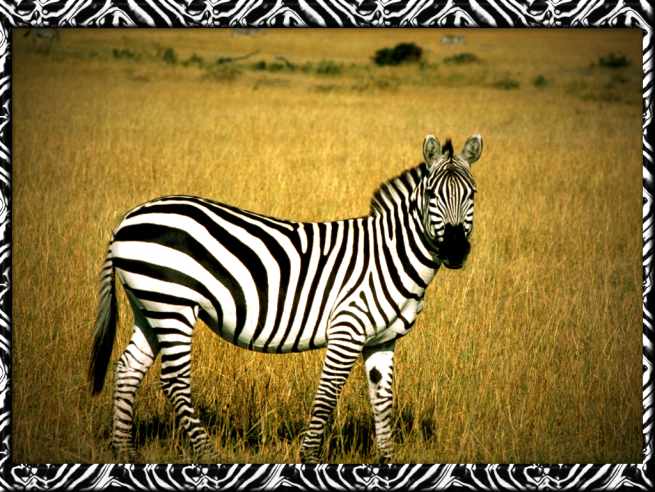
What drew me to the tale of the zebra was not only the gory and terribly drawn-out details of its death but also the obvious parallels the zebra’s death has to Pi’s entire journey after the sinking of the Tsimtsum. At one point in the story, close the hyena’s final attack on the zebra Pi despairs that he “could not imagine that things could get any worse,” (Life of Pi, 159). Such a statement is one Pi undoubtedly meant not only for the zebra’s predicament, but also for his own dire situation. Even though Pi does not go through the physical pain that the zebra does – unless you count the hunger pain he surely experiences – he does suffer from extreme emotional and mental duress during his days at sea, yet he bares the task nobly and without complaining. Rather, he worries mostly for his family, for the animals on his boat, and even for those who wish him harm and try to kill him. By the end of Pi’s time at sea, his own sense of defeat mirrors that of the zebra’s when, as Martel wrote, “[the zebra] was glassy-eyed and had become perfectly indifferent to the hyena’s occasional assaults,” (Life of Pi, 161). Pi writes in his diary that, “It’s no use, I will die today. I die,” (Life of Pi, 303). Both beings had reconciled themselves to the fact that they would probably die, and though that does not end up being Pi’s fate, he still faces the prospect with the same calmness as the poor zebra.
To bring the whole zebra and Pi’s stories full circle, I found a quote that explained both the zebra’s predicament and Pi’s selfless attitude when he endures the same type of pain. “I have not forgotten that poor zebra and what it went through,” he noted, “Not a prayer goes by that I don’t think of it,” (Life of Pi, 151). Suffice it to say, I was thoroughly humbled and stunned by Pi’s bravery and selflessness in these scenes and in this whole book. I could only hope to exhibit half the qualities Pi does were I to ever be placed in such a situation.

No comments:
Post a Comment